ServicesWall Repair
Wall Repair in Yonkers
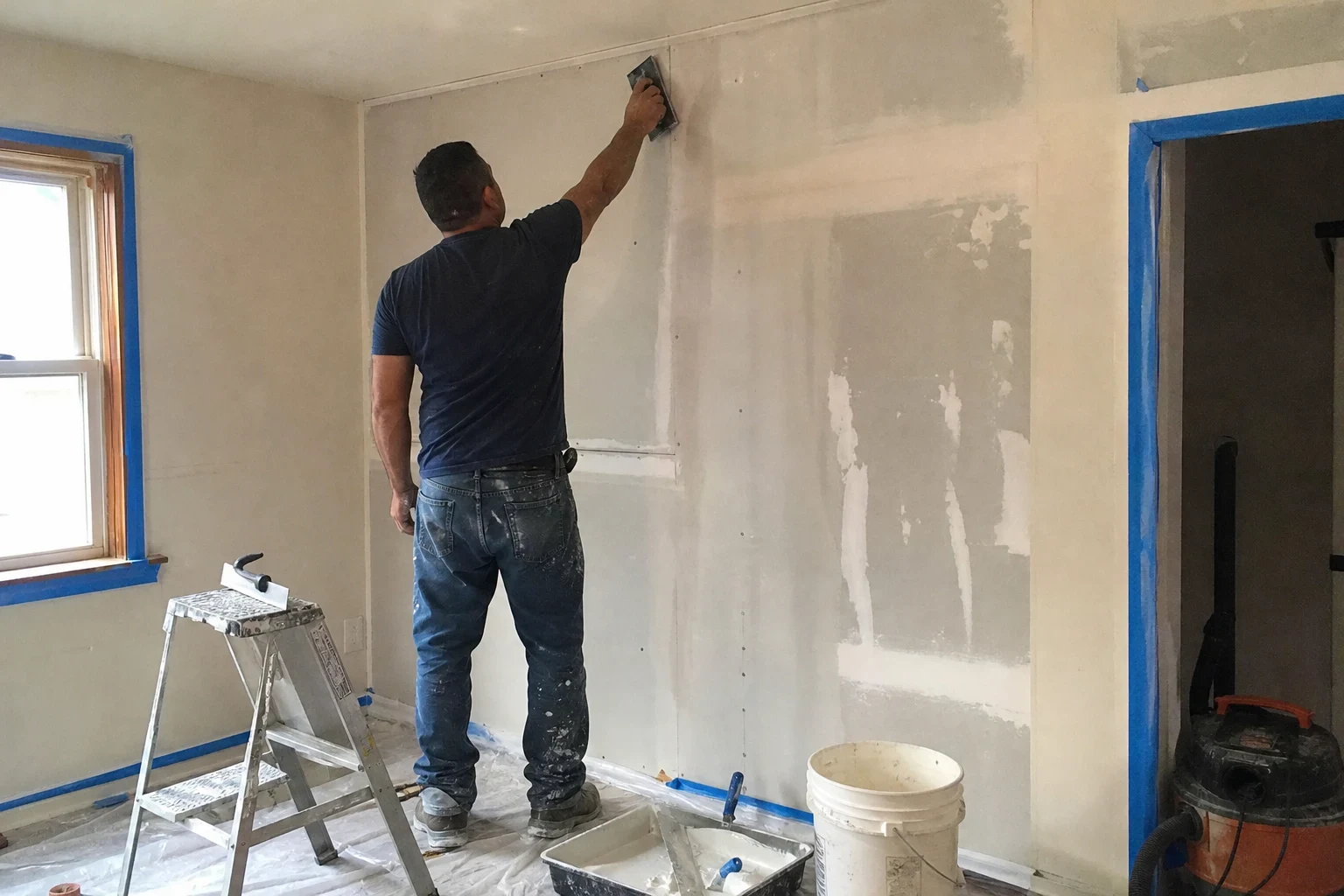
We repair walls of every age, from prewar plaster on lath to drywall hung last decade. We find out what the wall is made of and why it failed, then rebuild it with matching materials so the repair holds and disappears into the room.
Repairs matched to the wall you actually have
Wall repair is our broader service for walls that need more than a quick patch. That covers cracked or loose plaster, drywall with dents and split seams, corners that have lost their bead, and earlier repairs that have started to bulge or show through paint.
The material matters. Plaster is hard, thick and keyed into wood or metal lath, and it moves differently from gypsum board. Many homes around Yonkers have both, sometimes in the same room after a past renovation. Putting lightweight drywall compound over a loose plaster key only hides the problem for a season, so we secure the base first and build the finish on top.
If your damage is a single hole in board, our drywall patching page may be the better fit. For larger sections that need new sheets, see drywall hanging.
What a wall repair includes
- 01
Finding the cause
We look at why the wall cracked or softened before we touch it. A crack that keeps reopening above a door frame needs a different approach than a dent from a moving dolly.
- 02
Plaster stabilization
Where plaster has pulled away from the lath, we reattach it with plaster washers and adhesive, then fill and skim. Sound plaster stays in place, which keeps more of the original wall.
- 03
Drywall section replacement
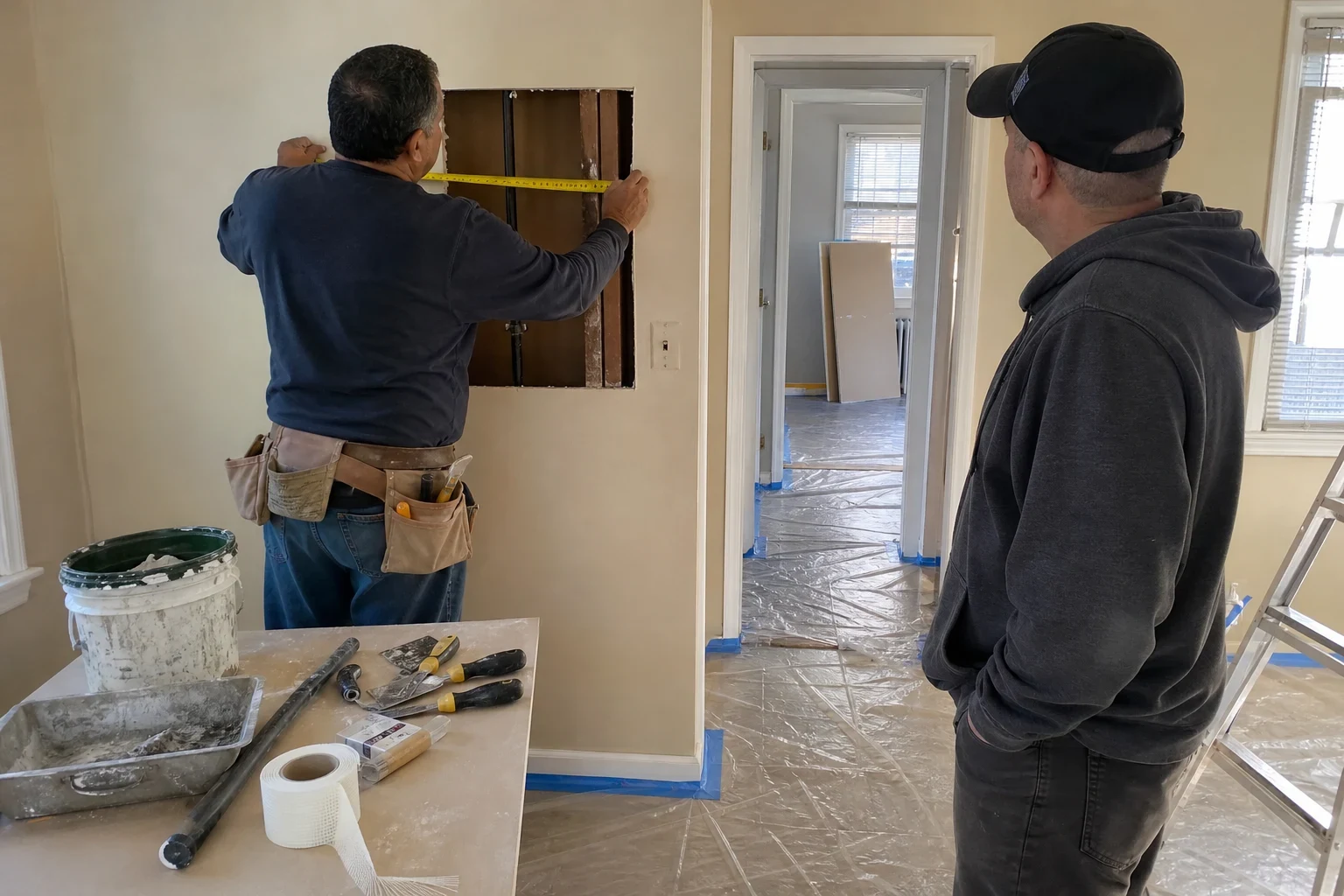
Board that is crumbled, swollen or soft gets cut back to clean edges and replaced. New pieces are fastened to framing or backing, never just floated in the hole.
- 04
Crack and seam repair
Cracks are opened slightly, taped with mesh or paper and filled with setting compound so they resist reopening as the house moves with the seasons.
- 05
Texture matching and sanding
We match the surface of the surrounding wall, whether that is smooth plaster, light orange peel or a hand-troweled look, and sand until the repair blends into the wall around it.
- 06
A clean work area
Floors and furniture are covered, dust is contained, and we vacuum before we leave. The wall is primed and ready for paint touch-up when we are done.
Questions about Wall Repair?
Call(914) 568-3360Signs a wall needs repair, not just filler
Cracks that come back
You filled it, painted it, and a year later the line is back. That usually means the repair had nothing structural to grip, or the crack was never taped.
Plaster that sounds hollow
Press gently near a crack. If the surface flexes or you hear a dull, hollow tap, the plaster has likely lost its grip on the lath behind it.
Bulges and bubbling paint
A raised area or blistering paint often marks an old patch that is separating, or moisture that got into the wall at some point.
Stains or soft spots
Brown rings or a section that dents under a thumb point to past water exposure. Once the leak source has been fixed, the damaged material should come out.
Damaged outside corners
Chipped or cracked corners in hallways and stairwells usually mean the corner bead is loose or rusted and needs replacing.
How the work goes
- 1
A conversation by phone
You tell us what you are seeing, where it is and how large it looks. The more you can describe, the better, and we set a time to look in person.
- 2
An assessment at your home
We check the material, the extent of loose or damaged areas and anything behind the surface that could affect the repair. You get a written estimate that lists each part of the work.
- 3
Prep and repair
We protect the room, then cut out or stabilize the damage and rebuild it. Setting compound is used for base coats because it cures hard and shrinks less than premixed mud.
- 4
Finishing coats
Thin finish coats are feathered wide so the repair does not show as a bump under raking light. Larger jobs need drying time between coats, so some repairs span two or three visits.
- 5
Final sanding and cleanup
We sand, prime and walk the wall with you under good light. The room is cleaned before we go.
What affects the cost of wall repair
Every wall repair is priced after we have seen the wall, because two cracks that look alike can have very different causes. Your written estimate breaks the work into parts so you can see where the cost comes from. These are the main factors.
- Plaster or drywall
- Plaster repair usually takes more steps, since loose areas have to be reattached before any filling. Drywall is often quicker when the damage is contained.
- Size and number of areas
- One room with several cracks is more efficient than the same work spread across different floors. Grouping repairs on one visit helps.
- What is behind the surface
- Rotted lath, missing backing or old water damage found once the wall is opened can add work. We show you what we find before going further.
- Finish and texture
- A smooth, level skim coat across a whole wall costs more than blending a small area. Matching unusual hand textures also takes extra time.
- Access and height
- Stairwells and tall walls need ladders or planks and more setup, which adds labor.
Wall repair questions
Should old plaster walls be replaced with drywall?
Not usually. Plaster that is mostly sound can be stabilized and repaired, and it keeps the solid feel and sound dampening of the original wall. We recommend replacing a section only when the plaster is crumbling or the lath behind it has failed.
Why do the cracks in my walls get worse in winter?
Older homes expand and contract as heating dries the air and summer humidity returns. Seams and corners take that movement first. Taping the crack with setting compound handles the movement far better than surface filler.
Can you fix a wall after a leak?
Yes, once the source of the water has been repaired and the wall has dried. We cut out any soft or stained material, replace it and seal the area with a stain-blocking primer so marks do not bleed through later.
Will the repaired area match the rest of the wall?
That is the goal of the finishing stage. We match the texture and feather the edges wide, then prime. The wall will need paint over the repair, and our paint touch-ups service can handle that when the color is available.
How messy is wall repair?
Cutting and sanding make dust, so we cover floors and furniture, seal off the work area where needed and clean up at the end of each visit. Most rooms can be used again the same evening.
Ready to have that wall looked at
Tell us what the wall is doing and where it is. We will arrange a visit, explain what we find and give you a written estimate before any work begins.