ServicesDrywall Repair
Drywall Repair in Yonkers
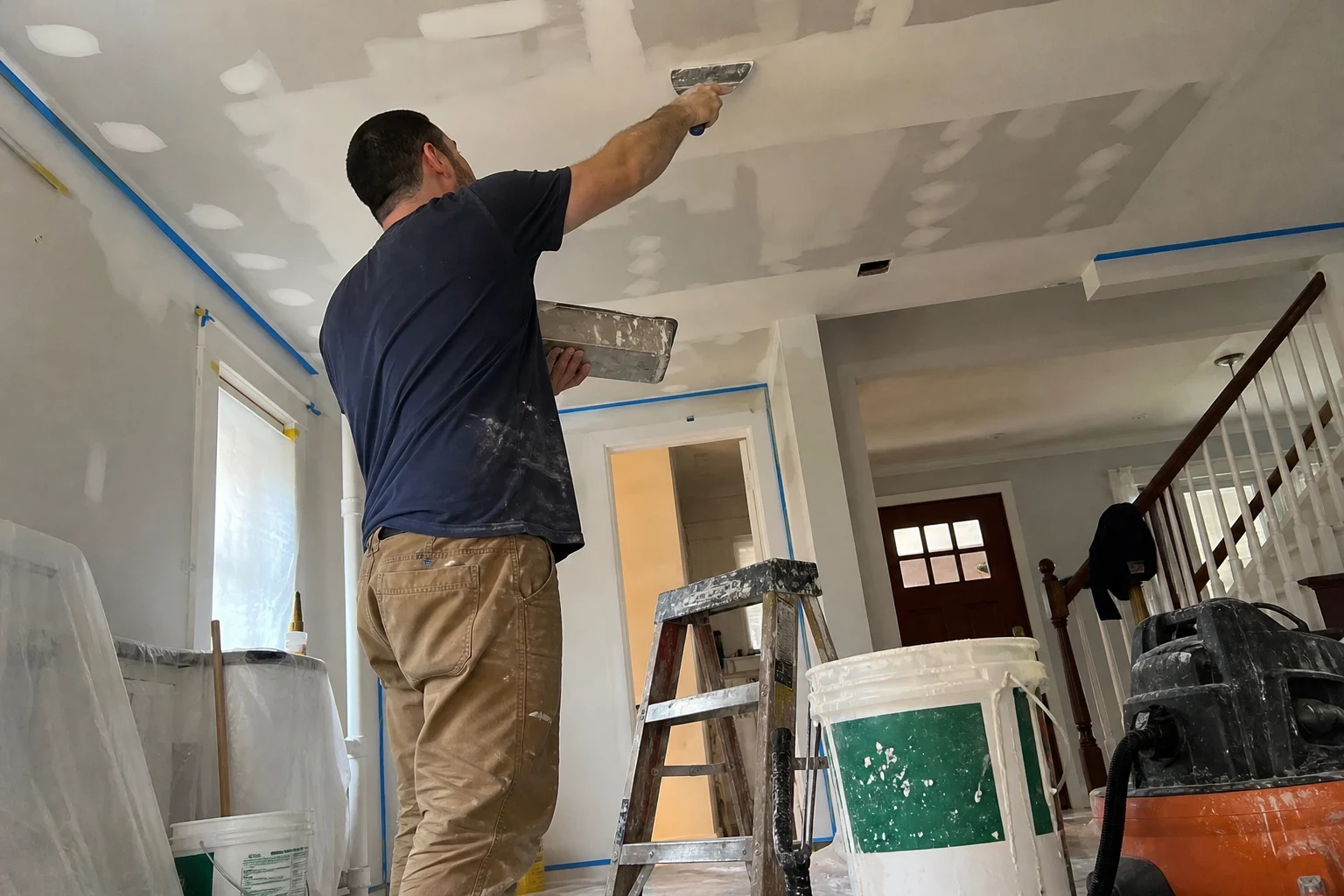
We repair cracked seams, holes, popped screws and water-damaged drywall, then match the texture so the fix disappears once it is painted. You get a sound wall, a clean work area and a clear explanation of what caused the damage before we touch it.
When repair is the right call
Most damaged drywall does not need to come down. A cracked seam, a doorknob hole or a soft spot from an old leak can usually be cut back to sound board, rebuilt and finished so it matches the wall around it. Replacing a full sheet only makes sense when the gypsum core has crumbled, the paper face has mold behind it, or the damage runs across several studs.
Homes around Yonkers often mix materials: original plaster in older rooms, drywall in later additions and kitchens, and patches from past owners in between. We look at what your wall is actually made of before we pick a method, because a joint compound repair that suits half-inch drywall can crack when it is laid against old plaster.
If the damage is small and contained, our drywall patching page covers that work in more detail. Larger jobs on ceilings have their own page under ceiling repair.
What a drywall repair includes
- Finding the cause first
- A crack that returns every winter or a stain that spreads usually has a reason. We check for moisture with a meter, look for loose fasteners and note any movement at door frames before we start.
- Cutting back to sound material
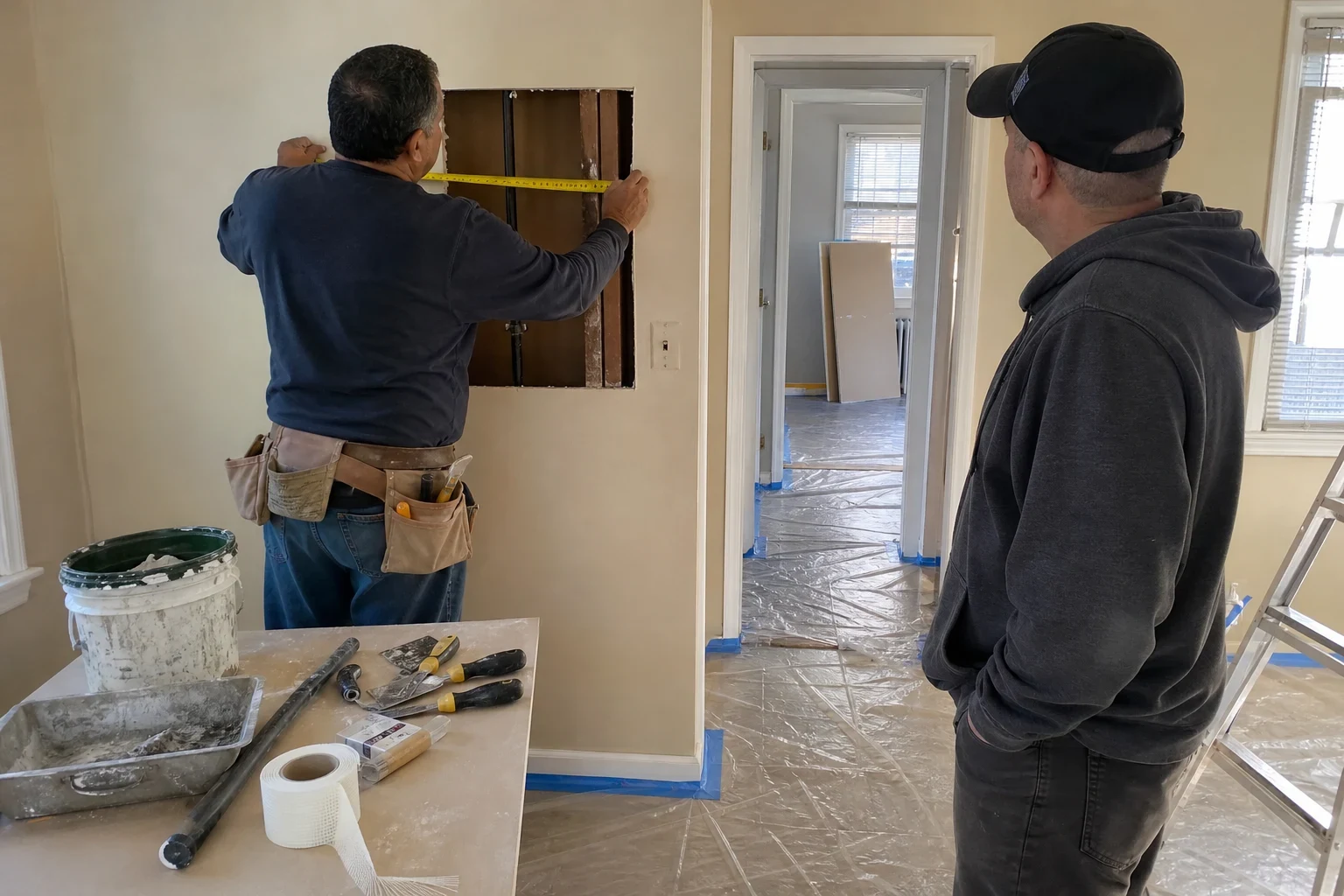
- Crumbled gypsum, delaminated paper and wet board are removed until the edges are firm. New material is fastened to framing or to backing we add behind the opening.
- Taping and coating in layers
- We use paper or mesh tape depending on the joint, then build the repair in thin coats with drying time between them. Rushing this step is what makes a patch shrink or crack a few weeks later.
- Texture matching
- Smooth walls are feathered wide so no ridge shows under raking light. Orange peel, knockdown and hand-troweled finishes are matched on a test area before we apply them to the repair.
- Sanding with dust control
- We sand by hand or with a vacuum-connected sander, and plastic sheeting goes up around the room openings. Floors are covered from the door to the work area.
- Primer and paint touch-up
- Fresh compound soaks up paint differently than the wall around it, so we prime it. If you have leftover paint, we can do the paint touch-up so the area blends.
Signs your drywall needs repair
Cracks above doors and windows
Diagonal cracks running from the corners of openings often come from the house settling or from seasonal swings between dry radiator heat and humid summers. They are usually a taping and finishing problem, not a structural one, but we will tell you if anything looks otherwise.
Nail pops in rows
Small round bumps lined up along a stud mean fasteners have backed out as the framing dried. We set new screws beside them and refinish.
Brown rings or soft spots
A stain or a spot that gives under your thumb points to water that has reached the gypsum core. Once the source is fixed and the area is dry, that section is cut out and replaced.
Peeling or bubbling tape
Tape that lifts along a seam was usually bedded with too little compound. It gets cut out and re-taped rather than glued down.
Holes from doors and furniture
Doorknob holes and corner dents are common in rentals between tenants and in busy hallways. They are quick to repair properly and easy to repair badly.
How the work goes
- 1
A conversation by phone
You describe the damage, where it is and roughly how large. Photos help us plan, and we will tell you whether it sounds like a repair or a replacement before we visit.
- 2
Assessment in your home
We look at the wall, check for moisture and explain what we found and why. You get a written estimate that lists each area and what will be done to it.
- 3
Protecting the room
Furniture is moved or covered, floors are protected and the work area is sealed off. If someone is home during the day, we keep the path through the house clear.
- 4
Repair and drying time
Most repairs take more than one visit because each coat of compound needs to dry before the next. Small jobs can finish in two short visits; larger ones are scheduled so you know which days we will be there.
- 5
Final sanding and cleanup
We sand, prime, check the surface under a work light and vacuum the room. You walk the finished repair with us before we leave.
What affects the price of drywall repair
Every repair is priced after we see it, and the estimate lists each area separately so nothing appears later. The number depends less on the size of the hole than on what is behind it and how the surrounding wall is finished.
- Size and number of areas
- One repair takes the same setup and drying time as three in the same room. Grouping repairs into one visit usually costs less than handling them separately.
- Wall material
- Repairs where drywall meets old plaster need extra steps to keep the joint from cracking. Plaster with lath behind it takes more preparation than modern board.
- Texture and finish level
- Matching a hand-troweled or knockdown texture takes longer than a smooth wall. Glossy paint and walls lit from the side demand a finer finish because every ridge shows.
- Water damage and access
- Wet or moldy board must be removed and the cavity allowed to dry before closing it up. High walls in stairwells and repairs behind fixtures add time for ladders, staging and careful work.
Drywall repair questions
Something not covered here? (914) 568-3360
Will I be able to see where the repair was made?
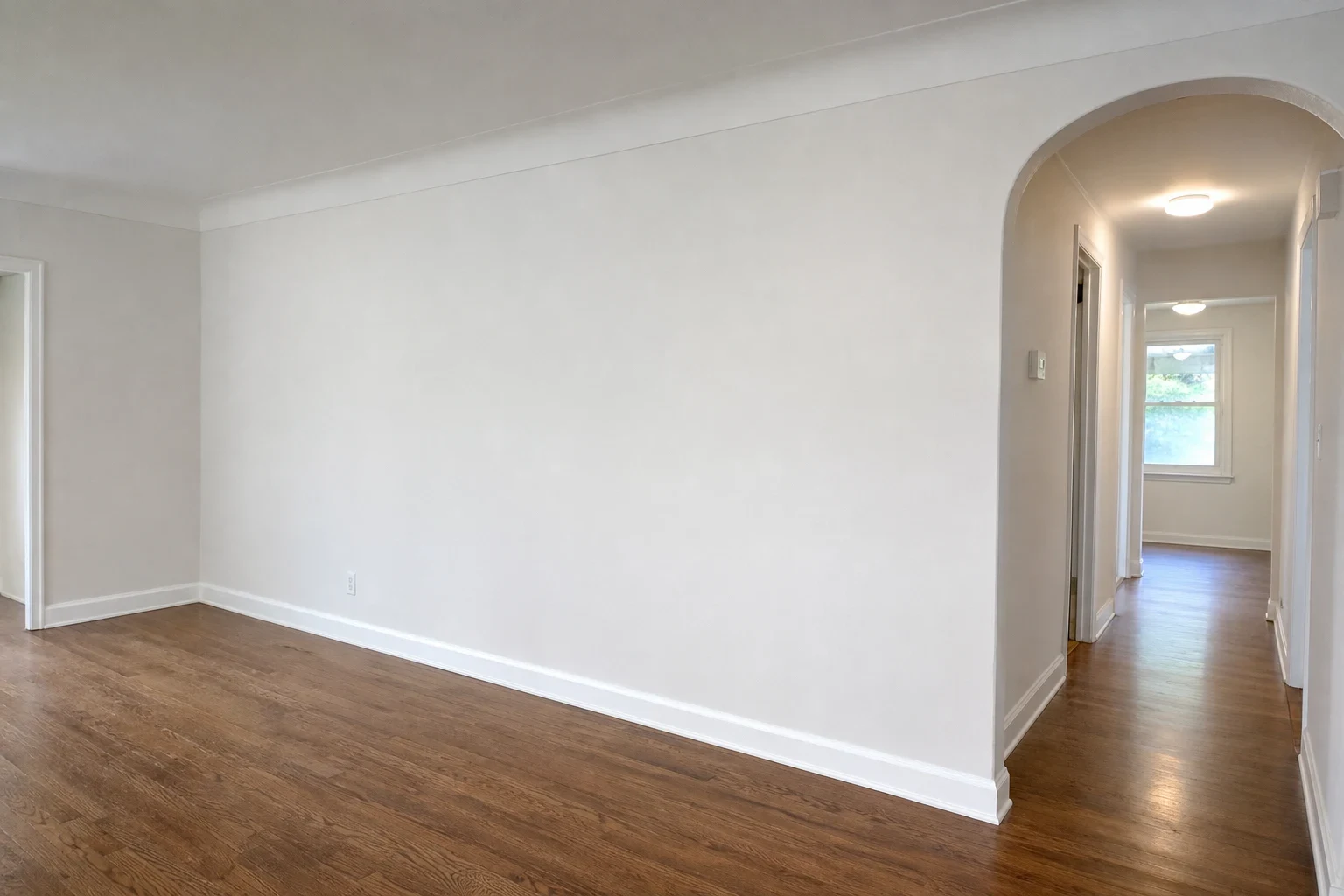
On a properly finished repair, you should not see it once it is painted. We feather the compound well past the damaged area and match the texture on a test spot first. The one variable is paint: if the original color is unavailable or has faded, the touched-up area can differ slightly in sheen or shade.
Why does my crack keep coming back after I fill it?
Filling a crack with spackle seals the surface but does nothing about movement at the joint. In many homes that crack opens again each heating season. We cut the crack open, bed new tape across it and build it up in coats so the joint can flex without showing.
Do I need a permit for drywall repair in Yonkers?
Ordinary repairs to existing walls and ceilings generally do not need one. If the work is part of a larger project that changes walls or involves other trades, check with the city's building department. We will tell you if anything we see suggests you should.
Can you repair drywall that got wet from a leak?
Yes, once the leak has been fixed by the appropriate trade and the area is dry. We check moisture levels before closing anything up, because covering wet framing leads to mold and new stains. Board that stayed wet for days is usually replaced rather than patched.
How long will the work take?
A few small repairs usually need two visits, one to fill and tape and one to finish, sand and prime. Larger areas or water-damaged sections may need three. We give you the schedule with the estimate so you can plan around it.
Do you work for landlords and property managers?
Yes. We repair walls in occupied apartments and between tenants, and we can coordinate access with a super or building manager. The written estimate breaks out each unit or room so it is easy to approve.
Ready to have the wall looked at
Tell us what the damage looks like and where it is. We will explain what we think is going on and set a time to see it in person, in Yonkers or nearby towns such as Mount Vernon and Dobbs Ferry.