ServicesCeiling Repair
Ceiling Repair in Yonkers
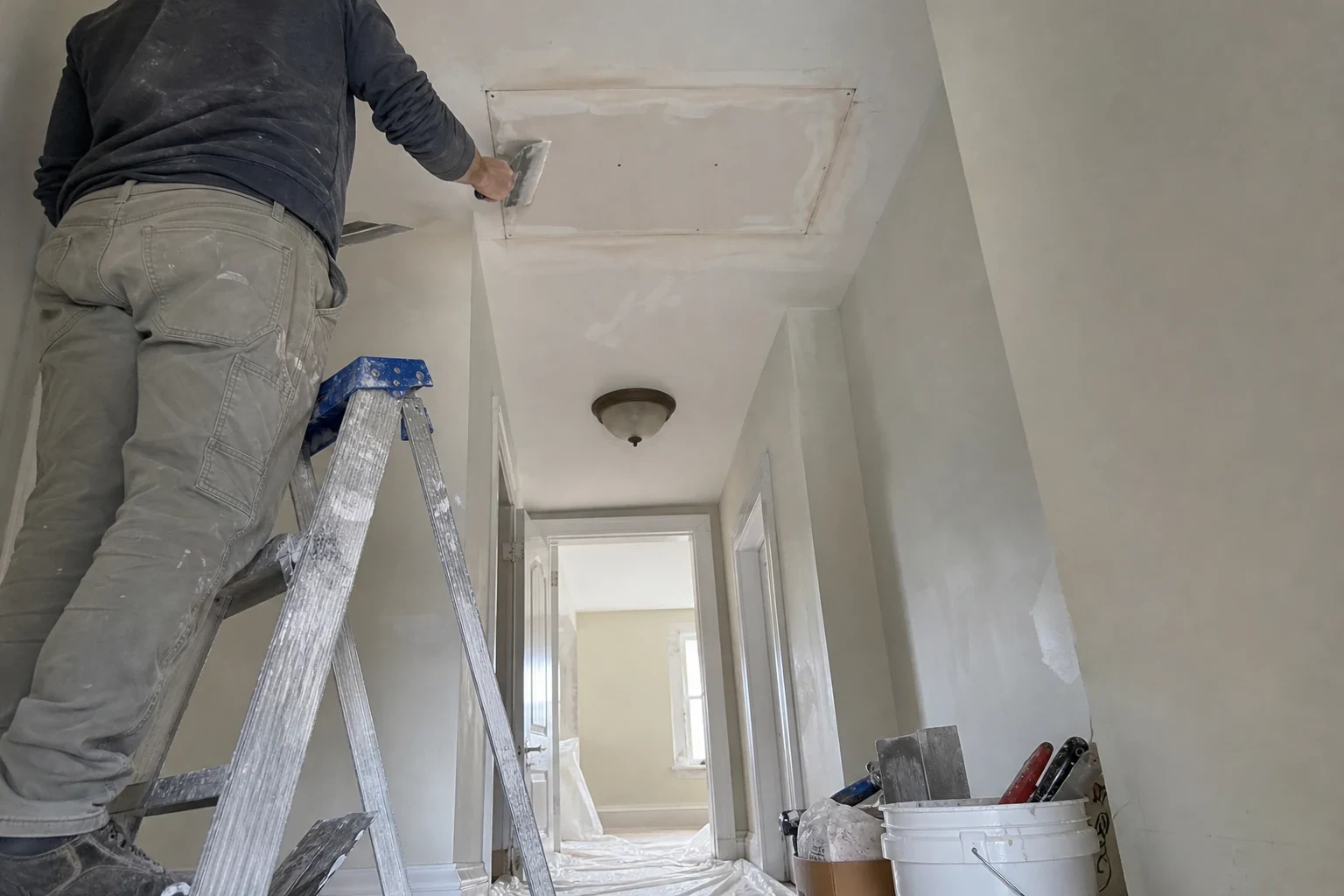
A stain that keeps spreading, a crack over the doorway, a soft spot that sags. We open up what needs opening, replace damaged drywall, match the texture around it and leave a clean work area. You get a ceiling that looks like nothing happened.
When a Ceiling Needs More Than Paint
Ceilings fail differently from walls. Gravity works on every sheet, so wet or loose drywall overhead tends to sag, pull off its screws and crack along the seams. Covering a stain with paint hides the symptom for a season. The board underneath may still be soft, and the next leak shows through again.
Our ceiling repair starts by checking what is behind the damage. We test for moisture, press on the area to find where solid board ends, and look at how the ceiling is fastened. Many older homes around Yonkers still have plaster on wood lath, and that calls for a different repair than drywall on joists. Once we know what we are working with, we cut back to sound material and rebuild from there.
What Our Ceiling Repair Includes
- 01
Moisture check before any cutting
We use a meter to confirm the area is dry. If it is still wet, we tell you, so the source can be fixed before we close anything up.
- 02
Removal of damaged board
Soft, stained or sagging drywall is cut out cleanly back to solid framing. We add backing where a seam would otherwise float between joists.
- 03
New drywall, taped and finished
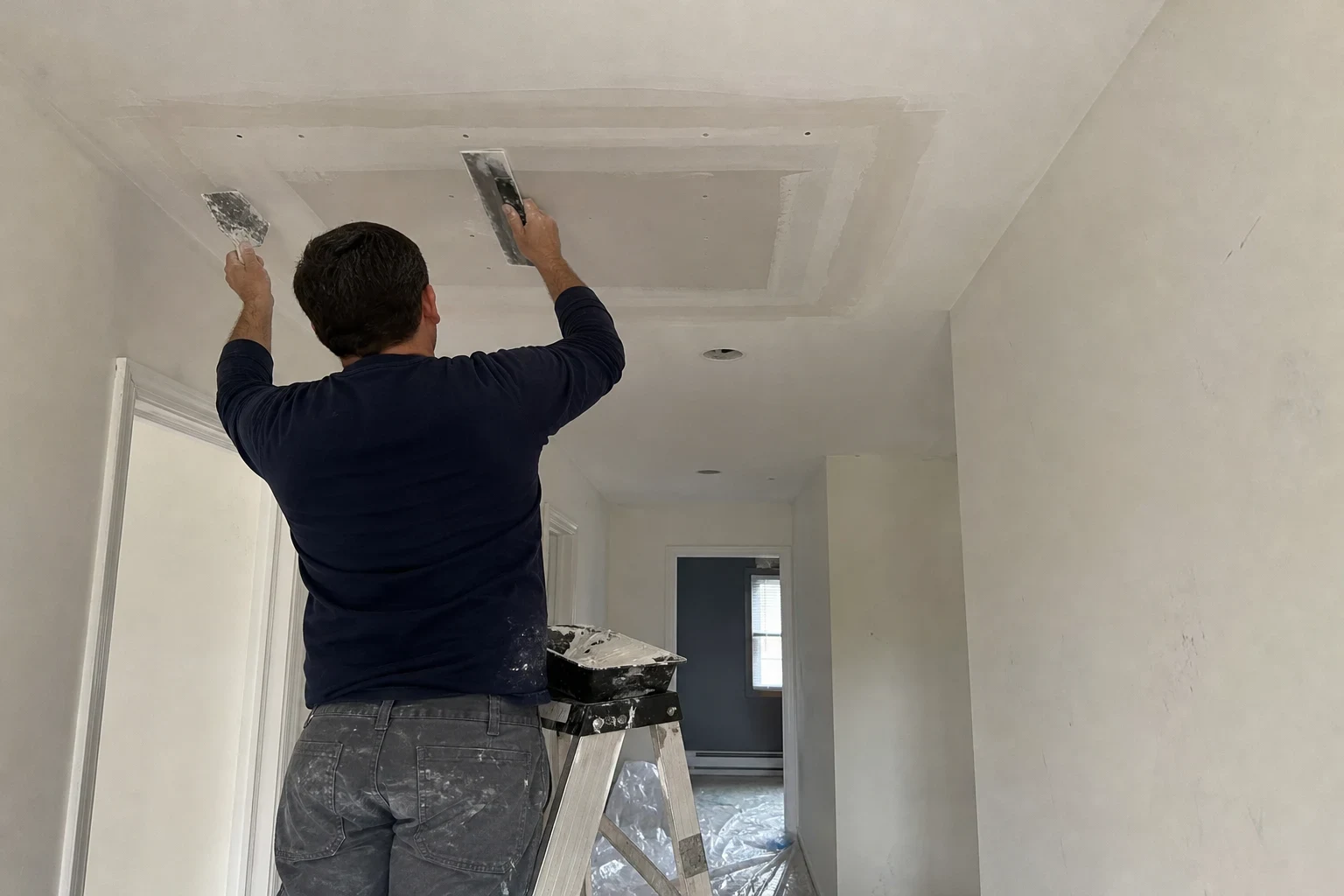
Replacement pieces are screwed off, taped and coated in thin layers. Each coat dries fully before sanding, which keeps seams from shrinking or cracking later.
- 04
Texture matching
Smooth, knockdown, orange peel or older hand-troweled finishes are blended into the surrounding ceiling so the repair does not read as a patch from across the room.
- 05
Stain sealing and paint touch-up
Water marks get a stain-blocking primer first so they cannot bleed back through. We then do a paint touch-up over the repaired area.
- 06
Protection and cleanup
Floors and furniture are covered, and dust is contained and vacuumed when we finish.
Questions about Ceiling Repair?
Call(914) 568-3360Signs Your Ceiling Needs Attention
Brown or yellow rings
Stain rings usually mean water reached the board at some point. Even when dry, the drywall paper and gypsum may be weakened.
Sagging or a soft bulge
A ceiling that dips between joists has often absorbed water or lost its fasteners. Keep people out from under it and have it looked at soon.
Cracks along seams or corners
Long straight cracks often follow tape joints that have let go. Freeze-thaw swings in a Yonkers winter make houses move, and loose seams show it first.
Nail pops in rows
Small round bumps lined up across the ceiling are fasteners backing out. A few are cosmetic; many can mean the board is pulling away.
Peeling paint or flaking texture
Bubbling paint overhead can point to humidity from a bathroom or attic, or to a slow leak above.
How a Ceiling Repair Day Runs
- 1
A look at the damage
We inspect the ceiling, check moisture and talk about what likely caused it. You get a written estimate that lists the work line by line.
- 2
Setting up the room
Furniture is moved or covered, floors are protected and we hang plastic where dust could travel into the rest of your home.
- 3
Cutting out and rebuilding
Damaged material comes out, backing goes in where needed and new drywall is fastened and taped. Joint compound goes on in thin coats.
- 4
Finishing and texture
After drying time, we sand, apply the matching texture and seal any stains. Larger repairs often need a second visit so each coat cures properly.
- 5
Touch-up and cleanup
We touch up the paint on the repaired area, remove the plastic, vacuum and walk you through the finished ceiling.
What Shapes the Cost of Ceiling Repair
Every ceiling job is priced after we have seen it, because the visible stain rarely tells the whole story. Your estimate will show what drives the number, and if we find something unexpected once the ceiling is open, we show you before going further.
- Size of the damaged area
- A small crack over a doorway is a short visit. A room-wide sag means more board, more taping and more drying time.
- Drywall or plaster
- Plaster and lath ceilings take more care to cut and join to new material than standard drywall.
- Texture and finish
- A smooth ceiling is simpler to blend than knockdown or an older hand texture that has to be recreated by eye.
- Height and access
- Stairwells and high ceilings need scaffolding or taller ladders, and crowded rooms take longer to protect.
Ceiling Repair Questions
Do I need to fix the leak before you repair the ceiling?
Yes. If water is still getting in, new drywall will stain and soften the same way. We confirm the area is dry before closing it up, and we can point out where the water appears to be coming from so the right trade can address it.
Can you match my textured ceiling?
In most cases, yes. We study the pattern and test on scrap board before applying it overhead. Very old textures can be close rather than identical, and we will tell you that honestly before we start.
My popcorn ceiling is old. Is it safe to repair?
Some older acoustic ceilings contain asbestos. Before we disturb one, we recommend having a sample tested by a lab, and we wait for the result before any cutting or sanding.
How long does a ceiling repair take?
Small repairs can often be finished in one visit. Larger sections usually take two or three short visits, because each coat of compound needs to dry before the next one goes on.
Will the repaired spot look different from the rest of the ceiling?
Our goal is a repair you cannot pick out from below. We feather the texture past the edges of the new board and do a paint touch-up over it. An aged ceiling may still show a slight color difference next to fresh paint, and we will point that out before we finish.
Let's Take a Look at Your Ceiling
Tell us what you are seeing overhead and how long it has been there. We will explain what is likely going on and set a time to inspect it.