ServicesPaint Touch-Ups
Paint Touch-Ups in Yonkers
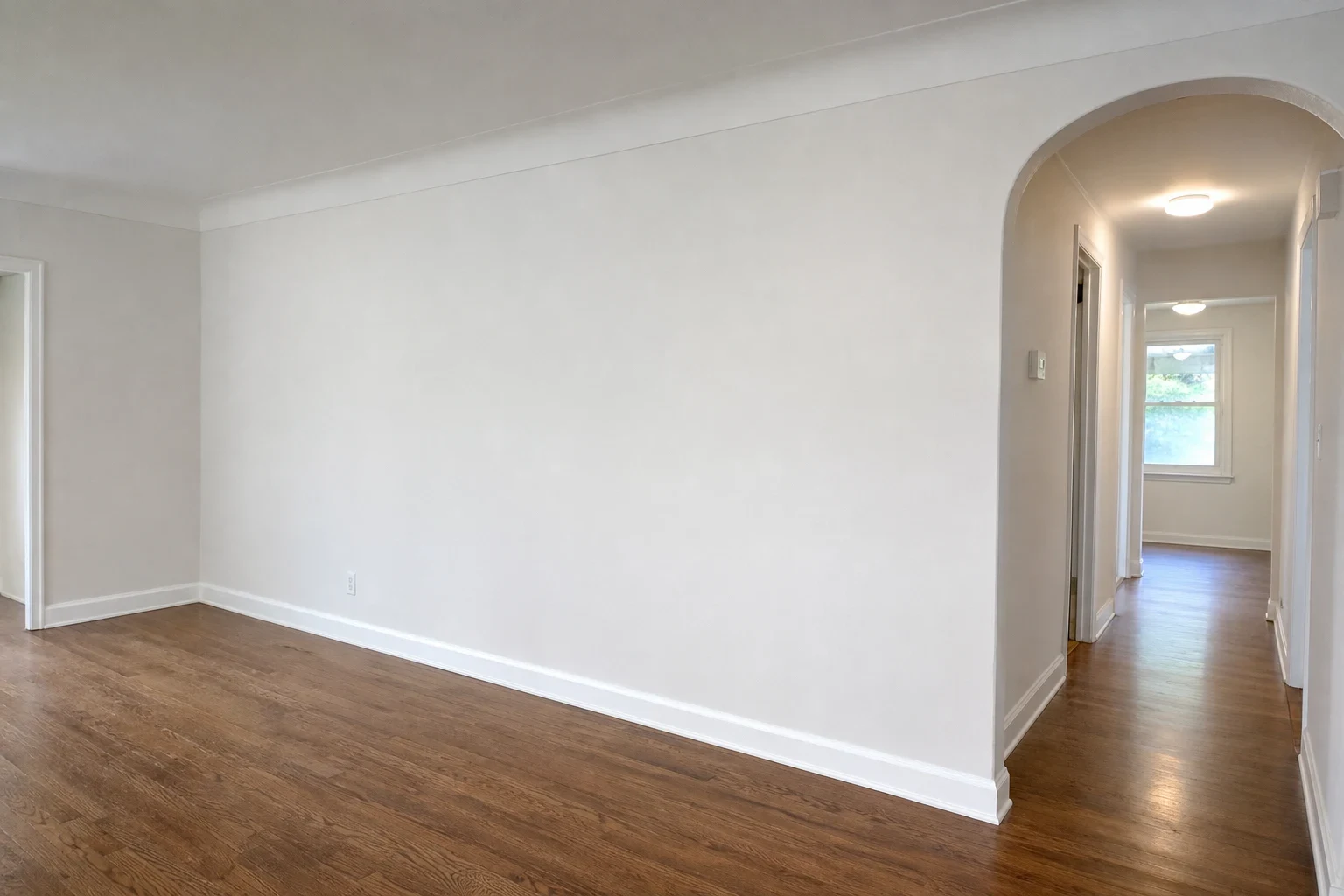
A good paint touch-up is one you cannot find a week later. We match the color, the sheen and the roller texture of the wall around it, prime anything that needs it, and leave a clean work area so the repair simply disappears into the room.
Small areas, done so they blend
A paint touch-up covers a limited area: a fresh drywall patch, a row of filled nail holes, a scuffed hallway, a spot where a fixture used to hang. The goal is not new paint for its own sake. It is a wall that reads as one even surface from every angle, including in low evening light.
Most failed touch-ups come down to three things. The sheen is slightly off, the color has drifted since the original coat went on, or bare joint compound soaked up the paint and left a dull halo called flashing. We plan for each of these before the brush comes out.
In older Yonkers homes, walls often carry many layers of paint over plaster or early drywall, and the top coat has usually aged. We take that into account when matching, rather than trusting the label on a can from the basement.
What a touch-up visit covers
Color matching
If you have the original paint, we check it for separation, skinning or freeze damage before using it. If not, we take a sample from an inconspicuous spot and have it matched, then test it on the wall and let it dry before committing.
Sheen matching
Flat, matte, eggshell, satin and semi-gloss all reflect light differently, and the wrong one shows instantly. We confirm the sheen on site, since rooms often have a different finish on trim, ceilings and walls.
Spot priming over repairs
Joint compound and bare paper absorb paint far more than a painted surface. We seal patched areas with primer first so the finish coat dries with the same sheen as the rest of the wall.
Feathered edges and matching texture
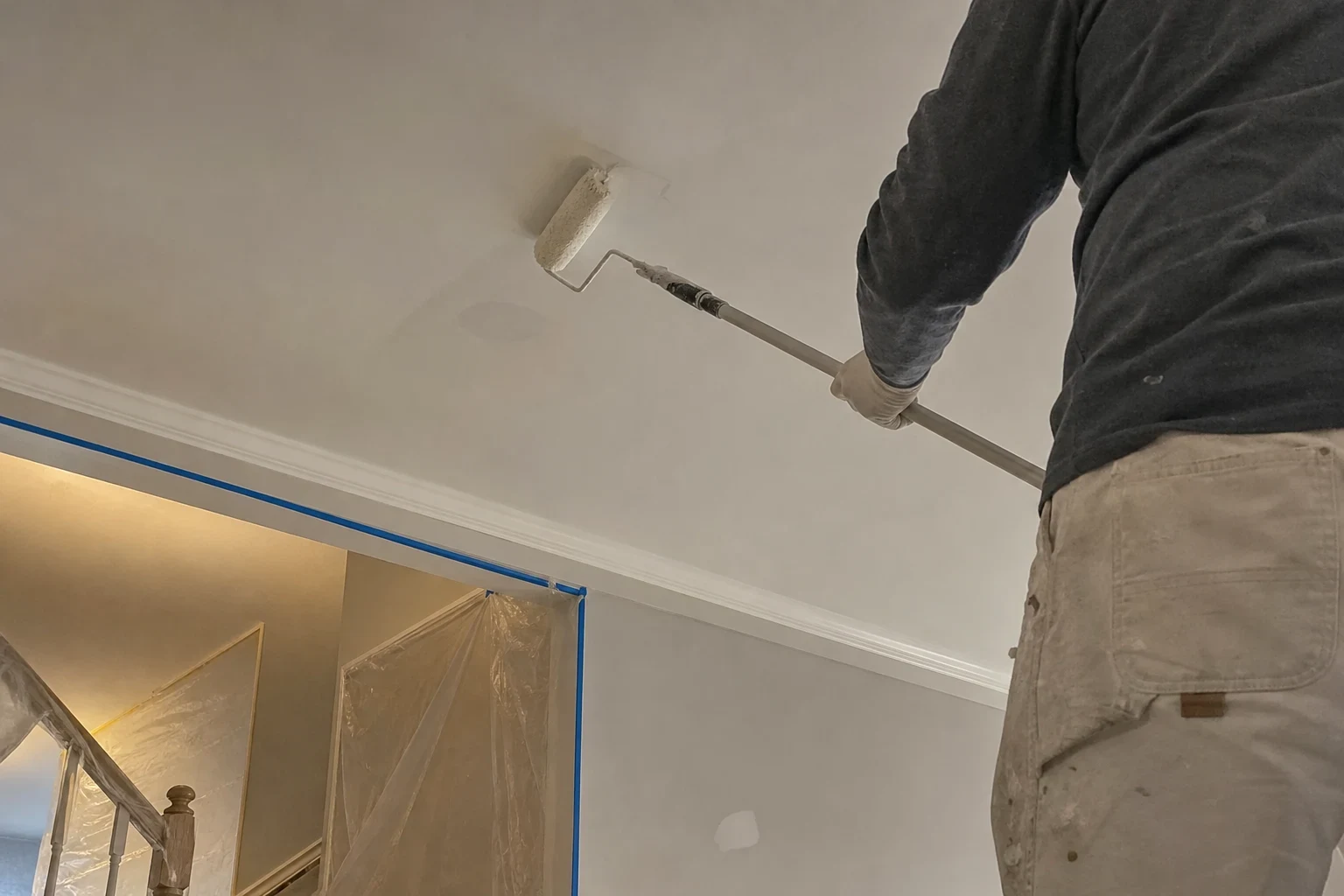
We feather the paint outward instead of stopping at a hard line, and we use a roller nap that reproduces the light stipple already on your wall.
Protection and cleanup
Floors and furniture near the work get covered, and we clean up our materials before we leave.
Signs a touch-up is the right call
- A patch that still shows
- The hole is filled and sanded, but you can see a dull square on the wall. That is usually unprimed compound or a sheen mismatch, and it is very fixable.
- Scuffs in busy spots
- Hallways, stair walls and the area behind chairs collect marks that washing will not lift, especially on flat paint.
- Filled holes after moving pictures or a TV
- Anchor holes and nail holes get filled, then need paint that sits flush with the surrounding wall.
- An old DIY touch-up that went wrong
- A shiny patch or a slightly different color from a previous attempt can usually be corrected without repainting the whole room.
- Getting ready for showings or new tenants
- Landlords and sellers often need a handful of small areas cleaned up quickly and neatly so walls look cared for.
How the visit runs
- 1
We talk it over by phone
You tell us what needs attention and whether you have leftover paint. We ask about the rooms, the finish and any repairs still to be made, then give you our quote by phone.
- 2
Inspect and test
On arrival we look at the wall in the light it actually gets, confirm the sheen, and test the color on a small area. We wait for that test to dry, because wet paint always looks different.
- 3
Prep and prime
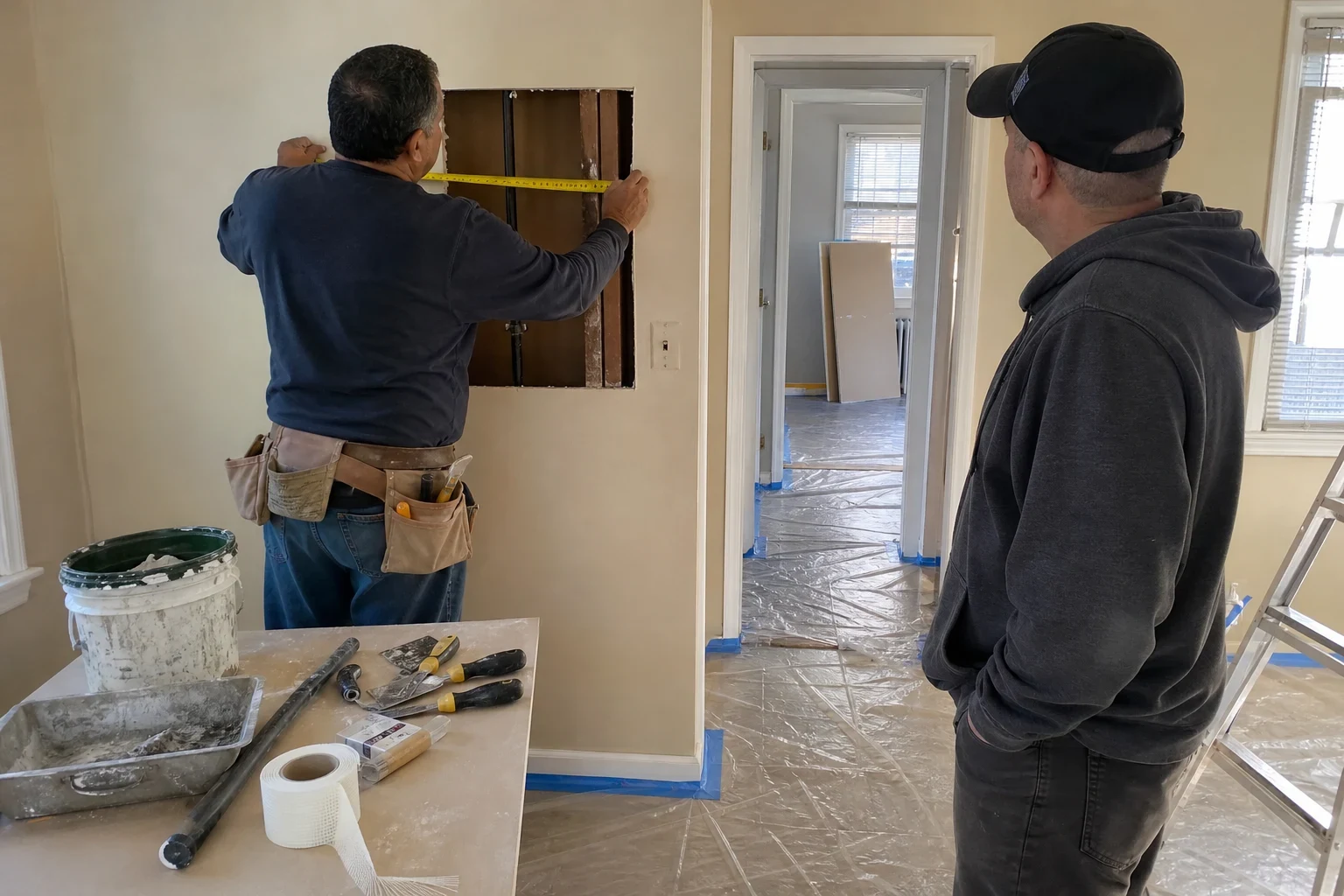
Any loose paint is scraped, edges are lightly sanded and wiped, and repaired areas get spot primer. If the wall needs patching first, we handle that as part of our drywall patching work.
- 4
Apply and feather
We roll or brush to match the existing texture, feathering out past the repair. Where a spot will not blend on its own, we carry the paint to a natural break such as a corner or edge.
- 5
Check and clean up
We look at the result from several angles, touch up anything that flashes, pack up and leave the room clean.
What affects the price
Touch-up work is priced by what it actually takes, not by a flat room rate. We explain each factor when we quote by phone, and we tell you before we begin if a spot is unlikely to blend.
- Number and size of areas
- A few nail holes in one room is a short visit. Scattered spots across several rooms take more setup, drying time and walking between areas.
- Paint availability
- Usable leftover paint keeps things simple. Matching aged or unknown colors adds a sampling and testing step.
- Condition of the surface
- Peeling layers, stains that bleed through, or unprimed patches need extra prep and sealing before the finish coat goes on.
- Sheen and texture
- Higher sheens like satin and semi-gloss show every lap mark, so they often need to be carried to a corner rather than spotted, which adds area.
Paint touch-up questions
- Can I give you the leftover paint from my basement?
- Yes, and it often helps. We open it, stir it and check that it has not separated, skinned over or been frozen. Paint stored in a cold garage through a Yonkers winter is often ruined. If it is still good, we test it on the wall first, since the wall itself may have faded.
- Why does my touch-up look shiny or dull even though the color is right?
- That is almost always sheen or absorption. A different finish level, or paint applied over bare joint compound, dries with a different surface. Priming the repair and confirming the sheen usually solves it.
- Do I need to know the paint brand and color name?
- It helps but is not required. We can take a small sample from a hidden spot and have it matched, then test before applying.
- How long until I can hang things back up?
- Most touch-ups are dry to the touch fairly quickly, but paint keeps curing for days. We suggest waiting a day before rehanging pictures and a bit longer before scrubbing the area.
- Will you tell me if a touch-up will not work?
- Yes. Some walls, especially older paint in strong light or glossy finishes, will not hide a spot repair. We say so before we start and explain the options rather than leaving you with a patch that shows.
Make the repair disappear
Tell us about the walls, the paint you have and what you are seeing. We will walk you through how we would approach it.