ServicesDrywall Finishing
Drywall Finishing in Yonkers
Hung drywall is only half a wall. We tape the joints, build up the compound in thin coats and sand each pass so the seams, screws and corners disappear under paint, even in raking window light. You get a smooth, primed-ready surface and a clean work area.
What finishing does and when you need it
Finishing is the taping, mudding and sanding that turns sheets of gypsum board into a wall that looks like one continuous surface. It comes after drywall hanging, after a large repair, or when an old wall needs a skim coat before it can be painted again.
The work is measured in levels. Level 4 suits most rooms with flat or eggshell paint. Level 5 adds a thin skim over the entire surface and is the right call for glossy paint, long hallways and walls that catch hard side light. We look at your room, your lighting and the paint you plan to use, then recommend the level that will actually hold up to them.
Many Yonkers homes mix original plaster with later drywall additions, and the transition between the two is where finishing shows its quality. We feather those joints wide so the change in material does not read through the paint.
What the work includes
- 01
Taping every joint
Paper tape bedded in compound on flat seams and inside corners, mesh with setting compound where a joint needs extra strength. Butt joints get a wider feathered fill because they have no taper to hide in.
- 02
Corner bead set straight
Outside corners get metal or paper-faced bead, fastened and coated so the edge is crisp and resists knocks from furniture and vacuums.
- 03
Thin coats with proper drying
We apply compound in two or three coats rather than one heavy one, letting each dry fully. Thick coats shrink and crack, and rushing the dry time is the most common reason seams show later.
- 04
Skim coating for Level 5
When the room calls for it, a thin layer of compound over the whole surface evens out the texture difference between paper face and joint compound.
- 05
Sanding with dust control
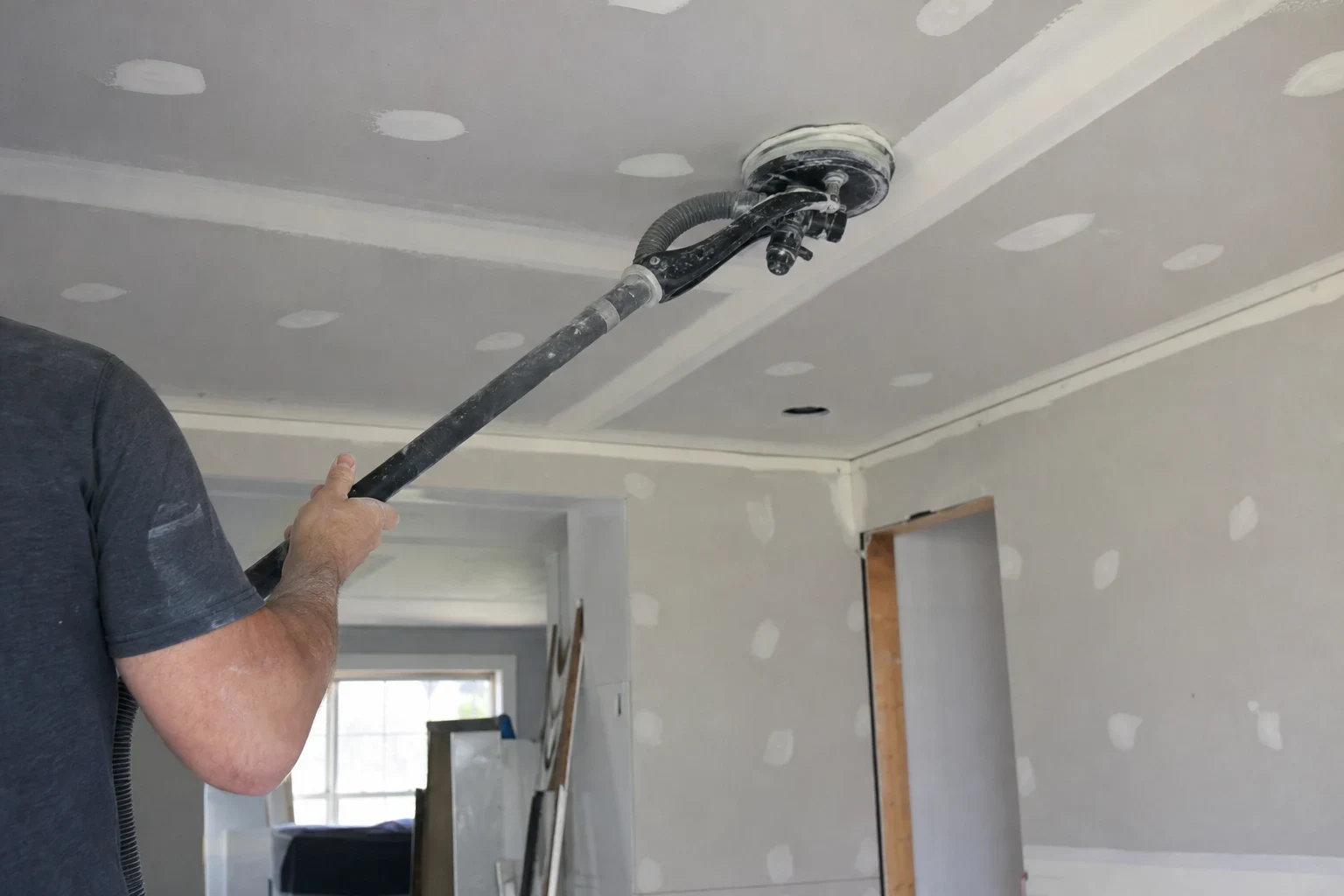
Fine-grit sanding between and after coats, using vacuum-attached sanders where we can. Doorways are sealed off and floors are covered before the first coat goes on.
- 06
Inspection under raking light
Before we call a wall done, we hold a work light flat against it to find ridges and pinholes that overhead light hides, and fix them then.
Questions about Drywall Finishing?
Call(914) 568-3360Signs your walls need finishing work
Seams you can see through paint
Lines running every four feet across a wall or ceiling usually mean joints that were under-filled or not feathered wide enough.
Screw pops and dimples
Small round bumps or craters over fasteners show where a screw was set too deep or has backed out as the framing dried.
Cracked or peeling tape
Tape lifting at corners or a hairline crack along a seam often follows seasons of dry winter heat and humid summers moving the framing. The joint needs to be cut back and retaped, not just painted over.
Patches that catch the light
A repair that looks fine head-on but glows as a rectangle from the side needs a wider, thinner feathered finish.
New drywall left unfinished
Board hung by another contractor or after an addition still needs taping and finishing before anything else can happen in the room.
How a finishing job runs
- 1
Look and plan
We check the hung board, the fasteners and the lighting in the room, then explain which finish level we recommend and why. You get a written estimate with each part listed.
- 2
Protect the room
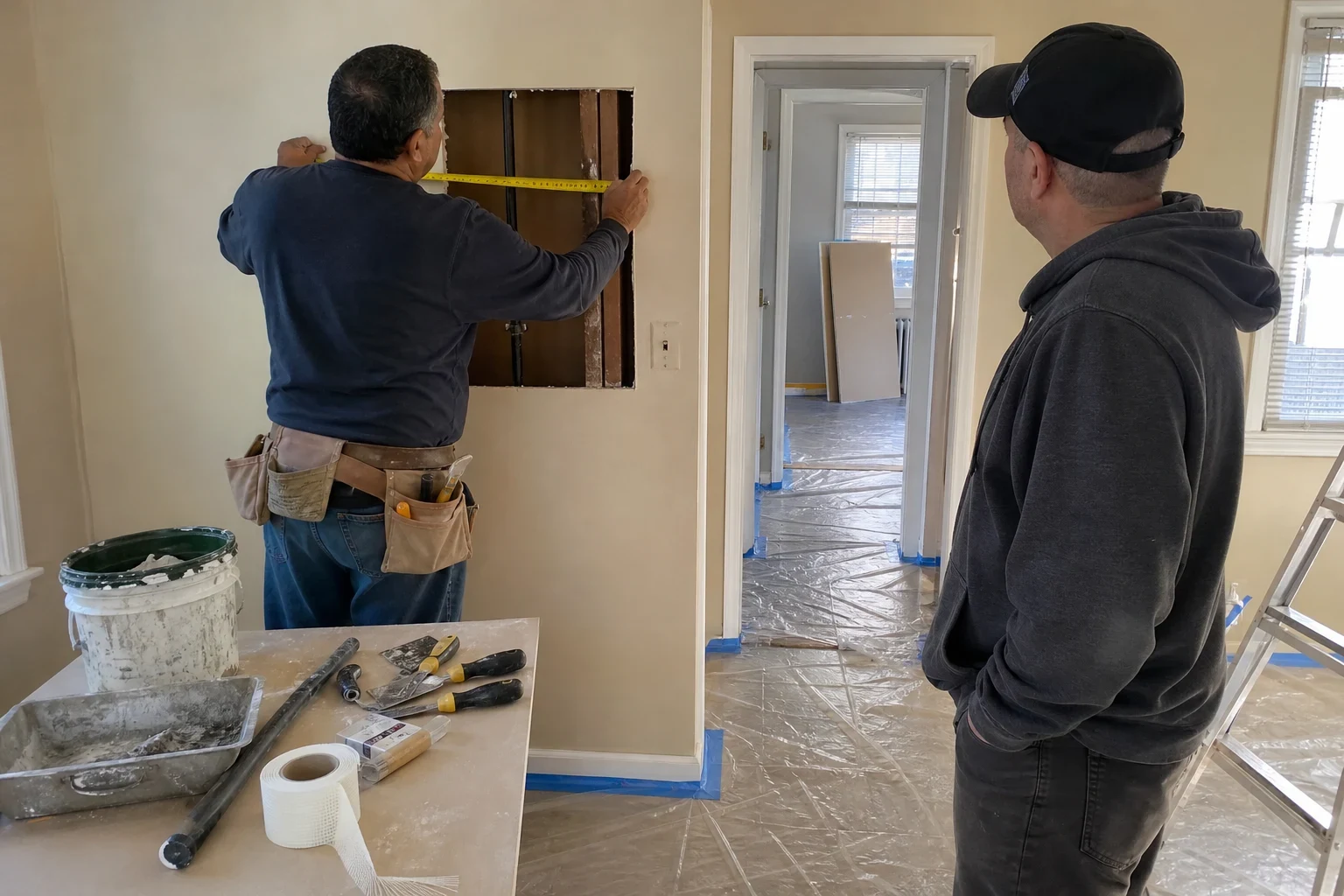
Floors are covered, furniture is moved or wrapped, and doorways are sealed with plastic so dust stays in the work area.
- 3
Tape and first coat
Joints are taped, corner bead is set and fasteners get their first fill. This coat dries overnight, longer in a humid stretch of summer.
- 4
Build, sand and repeat
Second and third coats go on wider each time, with sanding between. For Level 5 the skim coat comes last, followed by a final light sand.
- 5
Final check and cleanup
We inspect under side light, touch up what we find, vacuum the room and remove the plastic. The surface is ready for primer, and we can talk through paint touch-ups if a nearby area needs blending.
What moves the price
Finishing is mostly labor and drying time, so the price depends on how much surface there is and how smooth it needs to be. We quote after seeing the room, and the estimate shows what each part of the job covers.
- Finish level
- Level 5 takes an extra full coat and another round of sanding over every square foot, so it costs more than Level 4.
- Ceilings and height
- Ceilings, stairwells and tall walls need scaffolding or staging and slow the work down compared to standard wall height.
- Quality of the hanging
- Board hung with wide gaps, poorly placed seams or missing fasteners needs correcting before finishing can begin, which adds time.
- Corners and openings
- Rooms with many outside corners, window returns and archways take more bead and more careful coats than a plain rectangular room.
Drywall finishing questions
How many days does drywall finishing take?
Most rooms need three to four visits, because each coat has to dry before the next goes on. Setting-type compound can speed the early coats on a tight schedule. Humid weather slows drying, and we plan the timeline around that rather than rushing a wet coat.
Do I need Level 5, or is Level 4 enough?
Level 4 is right for most bedrooms and living spaces with flat or matte paint. Level 5 is worth it for semi-gloss walls, long hallways with windows at one end, and ceilings lit by recessed or wall-washing fixtures. We will tell you honestly if the extra coat is not needed.
How much dust should I expect?
Some fine dust is part of sanding compound, but we keep it contained with plastic sheeting at doorways, covered floors and vacuum-attached sanders where possible. We clean up at the end of each day and fully at the end of the job.
Can you finish drywall someone else hung?
Yes. We look at the hanging first, and if seams, gaps or fasteners need correcting we point it out and include that in the estimate, so there is no surprise mid-job.
Will the new finish match my older plaster walls?
We feather the joint between drywall and plaster wide and can skim the transition so the two surfaces read as one under paint. Any texture matching is discussed during the first visit.
Ready for walls that look finished
Tell us about the room, the board and the paint you have in mind. We will explain the finish level that fits and what the job involves.