ServicesDrywall Patching
Drywall Patching in Yonkers
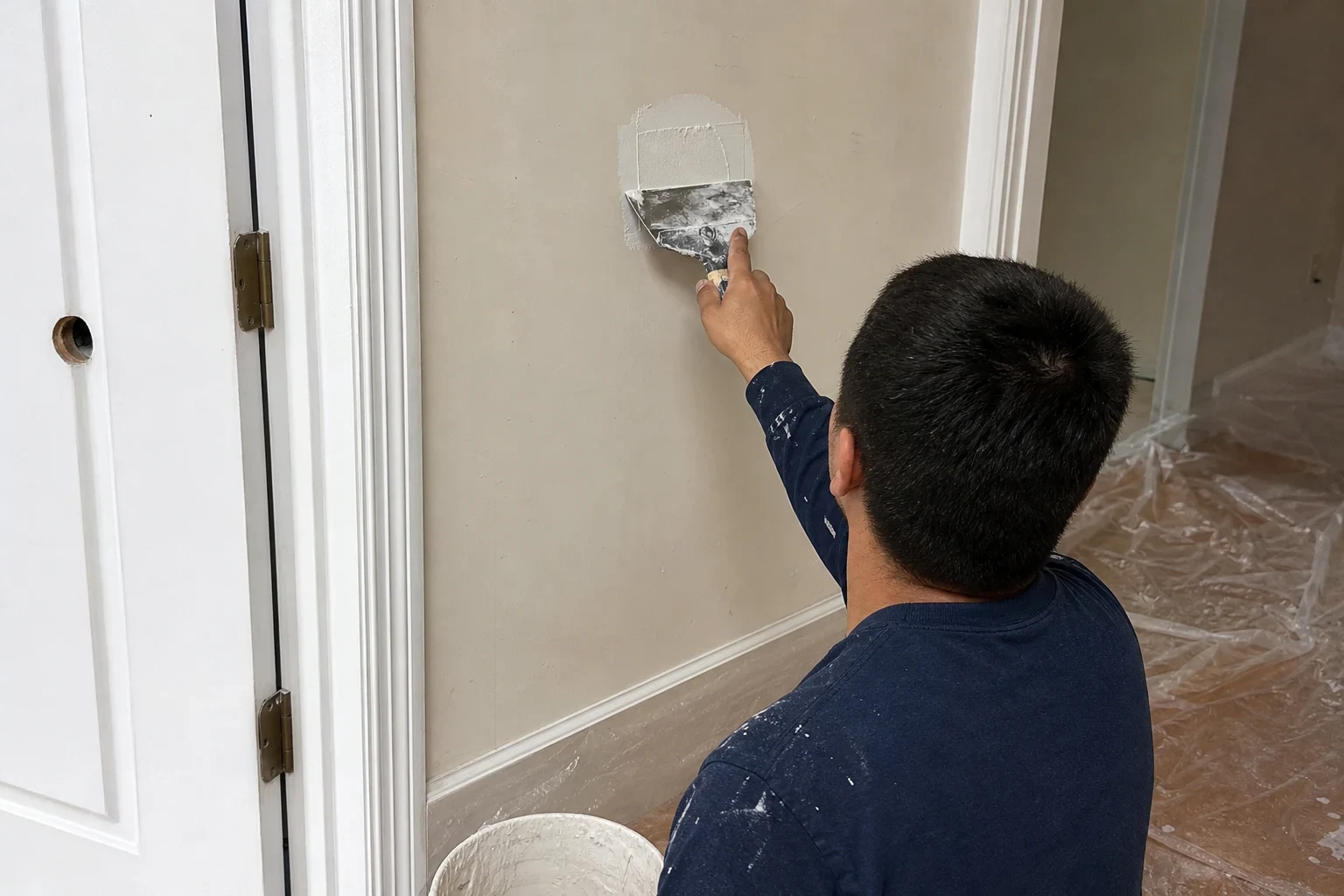
We patch the holes, dents and cutouts that a busy home collects, from a doorknob strike to the opening left after an electrician. Each patch is backed, taped, feathered wide and textured to match, so the wall reads as one surface again.
When a patch is the right call
Patching is for damage that is contained: a hole you could cover with your hand, a dent from furniture, a row of anchor holes after a TV comes down, or a square cutout someone made to reach a wire. The board around it is sound and dry. If the drywall is soft, stained or sagging, the job is bigger than a patch, and our drywall repair or ceiling repair pages cover that work.
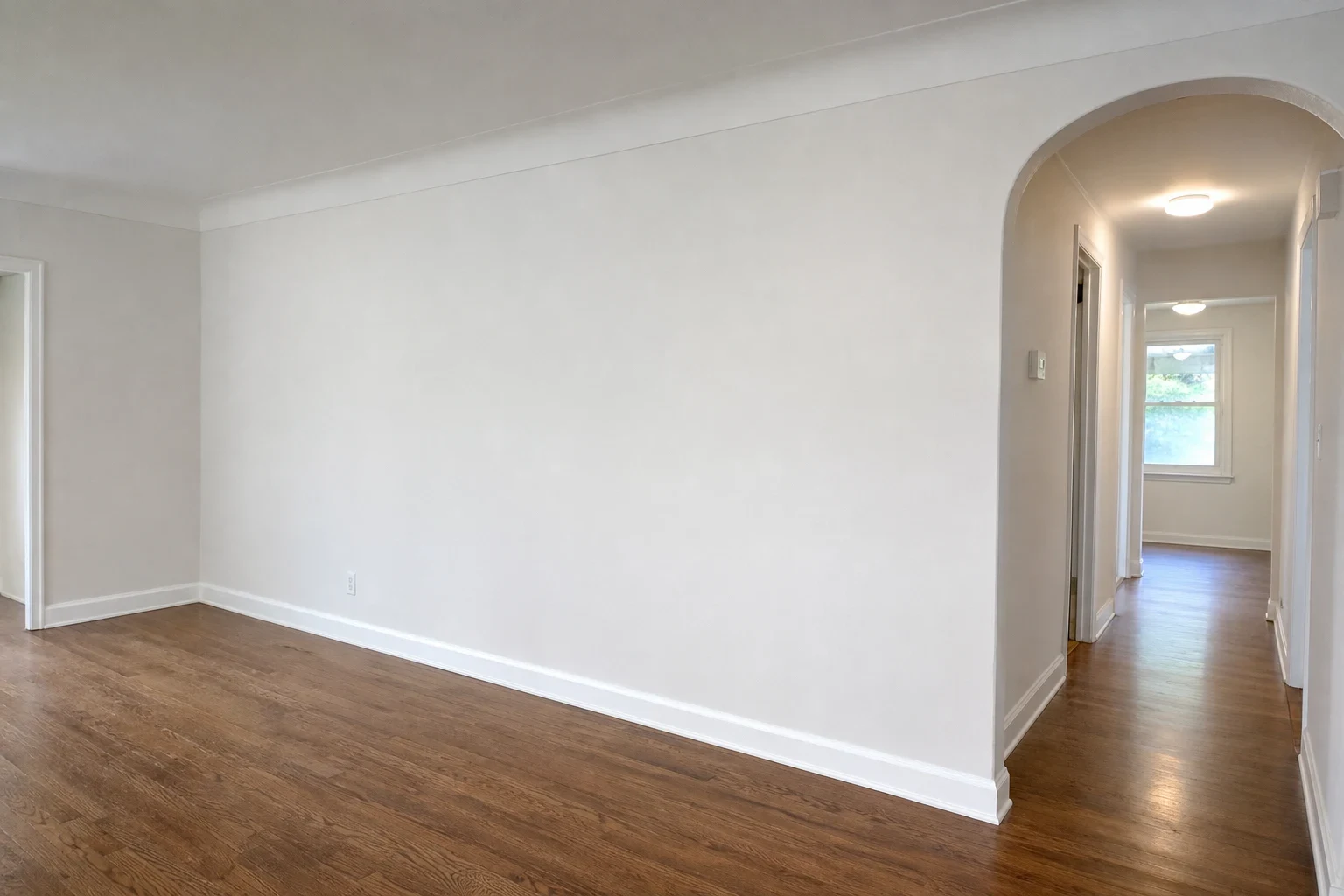
A good patch is mostly invisible because of what happens after the hole is filled. The compound is spread well past the edges and sanded so there is no hump under raking light, and the surface is matched to the wall around it. Many homes around Yonkers have older walls with a light hand texture or an earlier skim coat, so we look closely at the existing surface before choosing how to finish.
We will tell you plainly if a spot needs more than a patch, and we will tell you just as plainly when it does not.
What a patch job includes
Squaring and backing the hole
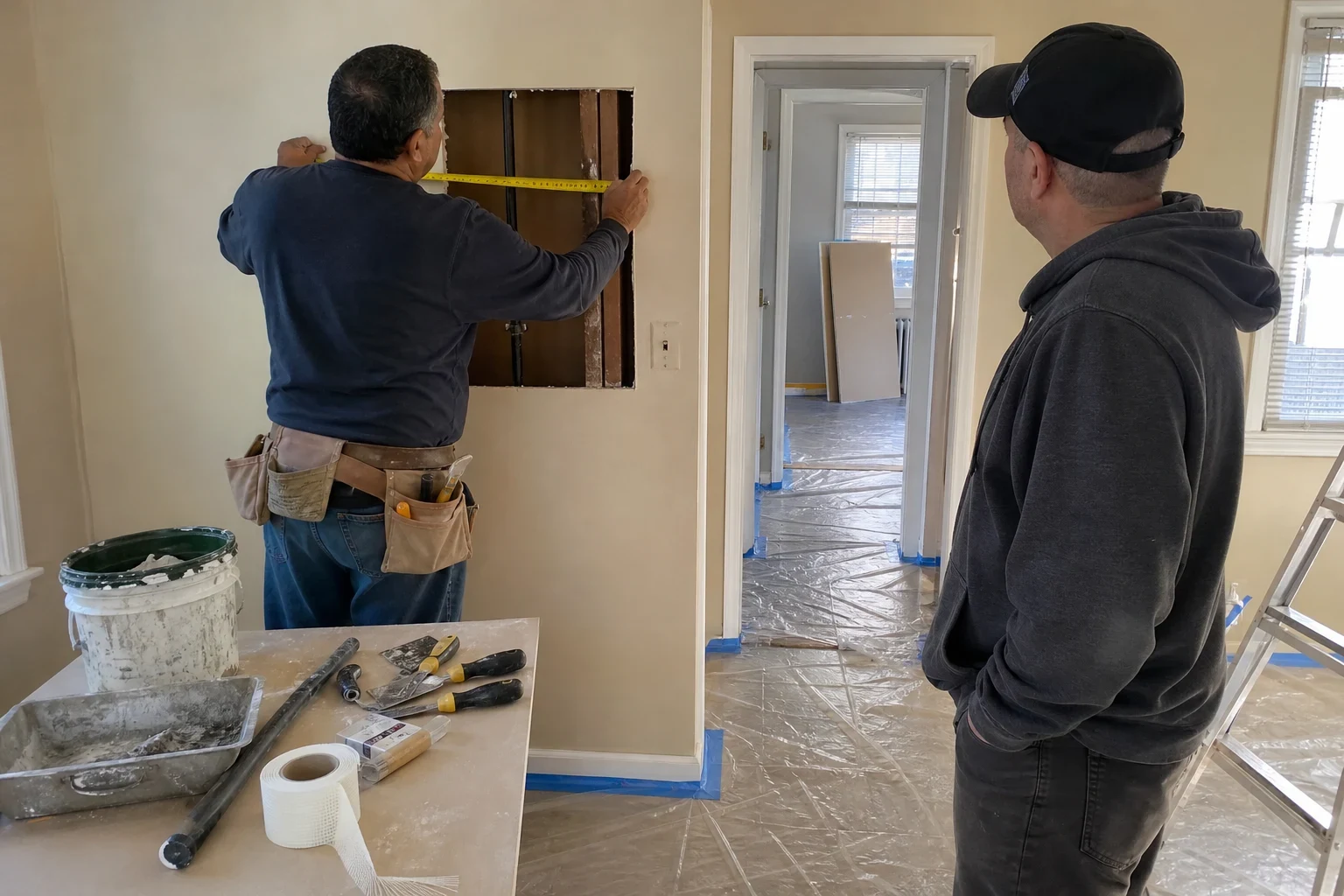
Ragged edges are cut back to clean board. Larger openings get wood or metal backing behind them so the new piece is screwed to something solid instead of floating in compound.
Fitting new drywall
We cut a piece of matching thickness so it sits flush with the face of the wall. A patch that sits proud or sunk is the most common reason a repair shows.
Tape and setting compound
Seams are taped and bedded in setting-type compound, which cures hard and shrinks less than premixed mud. Finish coats go on lighter and are feathered several inches past the patch.
Sanding with dust control
We sand by hand or with a vacuum-attached sander, checking the surface with a work light at a low angle. Floors and nearby furniture are covered so the dust stays in the work area.
Texture matching
Smooth walls stay smooth. Orange peel, knockdown or a hand-troweled finish is recreated and blended at the edges so the change from old to new is hard to find.
Primer and paint touch-up
Bare compound is primed so it does not flash through paint. If you have the leftover wall color, we can do a paint touch-up on the patched area as part of the visit.
Signs a wall needs patching
- A doorknob hole behind the door
- Once the board is broken through, it keeps crumbling with every swing. A patch now, plus a doorstop, ends it.
- Anchor and mounting holes
- Shelves, curtain rods and TV mounts leave clusters of holes and torn paper. These are quick to fill but need careful feathering to avoid a blotchy wall.
- Dents and gouges from moving
- Furniture corners and dollies crush the paper face. Crushed gypsum needs to be cut out, not just filled over, or it will bubble later.
- Access cutouts left open
- After electrical or cable work, walls are often left with a rectangle missing. We close it with a properly backed piece of board.
- An old patch that shows
- A ring, a bulge or a different sheen under afternoon light means an earlier patch was rushed. We grind it down and redo it so it lies flat.
How a patch visit runs
- 1
A phone conversation first
You tell us the size, the location and what caused the damage. Photos described over the phone help us plan how many coats and how much drying time the job needs.
- 2
Protecting the room
We lay drop cloths, move what needs moving and set up a clean work area around the wall before any cutting starts.
- 3
Patch, tape and first coats
The hole is squared, backed and patched, then taped and coated. Setting compound lets us apply a second coat the same visit in many cases.
- 4
Return visit for finish
Deeper patches usually need a second trip after the compound has fully dried. That is when we do final sanding, texture, primer and any paint touch-up.
- 5
Cleanup and a walk-through
We vacuum, fold up the coverings and look at the wall with you under a work light, so you see the finish before we leave.
What moves the price of a patch
Most patch jobs are priced by the visit and the amount of finishing involved, not by the hole alone. A single small hole and five scattered ones can take similar time once drying is counted. We explain what we see and give you a clear number by phone before work begins.
- Number and size of holes
- Small anchor holes are filled; anything larger needs new board and backing. Several patches in one room are more efficient than one-off visits.
- Wall surface and texture
- Smooth finishes demand more sanding and inspection under light. Hand textures and older skim-coated walls take more time to match convincingly.
- Drying time and return trips
- Humid summer weather slows drying, and deep fills need full cure before sanding. A second visit adds to the cost but is what keeps the patch from shrinking or cracking.
- Height and access
- A patch above a stairwell or high on a two-story wall needs ladders or planks and extra setup.
- Paint touch-up
- If you want the area painted, having the original color on hand keeps that step simple. A color that has faded over the years may need a wider blend.
Drywall patching questions
- Will I be able to see where the patch was?
- On a typical painted wall, the goal is that you cannot find it without knowing where to look. That depends on feathering the compound wide, sanding flat and matching texture and sheen. The one variable we cannot control is old paint that has faded, which is why a wider paint touch-up sometimes makes sense.
- Can you patch plaster walls?
- Many older homes in the area have plaster rather than drywall, or a mix after past renovations. Small plaster damage can often be patched with drywall and compound built up to the right depth. If the plaster is loose from its lath over a wide area, we will tell you that a patch alone will not hold.
- How long does a patch take?
- Small holes can often be finished in a single visit. Larger patches usually need two visits so the compound can dry fully before final sanding and texture. We will tell you which to expect when we talk on the phone.
- How much dust should I expect?
- Some, but contained. We cover floors and furniture, sand with a vacuum attachment where we can and clean up before we leave. Rooms stay usable once we are packed up.
- Should I patch before I move out of a rental?
- Landlords and tenants both call us for this. Anchor holes, doorknob damage and moving dents are the usual list, and patching them properly with primer leaves the wall ready for the next occupant.
Ready to close up that hole
Tell us what the damage looks like and where it is. We will explain how we would patch it and what the visit involves.